The Teenage Brain by Frances E. Jensen
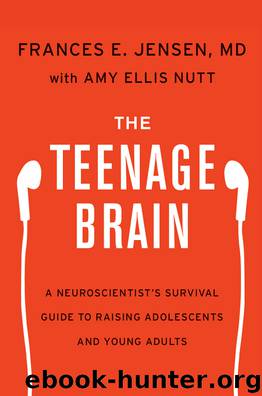
Author:Frances E. Jensen
Language: eng
Format: epub, mobi
Publisher: HarperCollins
Published: 2014-11-17T16:00:00+00:00
12
Mental Illness
Weathering teenagers’ adolescence often means just riding out the rough seas with them until calmer waters are reached. But because adolescence is already a time of mood swings and behavioral irregularities, it is even more important for parents, guardians, and teachers to be aware of the emotional needs of adolescents, especially in times of crisis and stress, when adolescents’ vulnerability to mental disorders is at its highest. There are two rules of thumb parents should remember: Number one, behavioral changes that seem to cluster or are associated with other symptoms should raise your level of suspicion that you might be dealing with something more than just a difficult teenager going through a phase. And number two, it is better to be safe than sorry. If you have any concern that radical or progressive changes are happening to your adolescent, then you must seek help for your child.
Difficult or irregular behavior in teenagers can be expressed by a variety of emotional states, from moodiness and sadness to oppositional behavior, rage, and aggression. The line between these highly charged but normal adolescent states and “real” mental illness can be difficult to determine. That’s because these behavior traits (which are common in kids this age) can be seen both in teens without a diagnosable personality or mood disorder and in teens with one of the more severe mental illnesses, such as major depression, bipolar disorder, or schizophrenia. Signs of depression, for instance, are hard enough to detect in teenagers you’re around all the time. With digital devices their constant companions, normal teens seem withdrawn compared with teens twenty years ago, making it that much harder to distinguish between a shy, introverted adolescent and a seriously depressed one. Adolescents don’t engage in as many group activities as they did years ago. All this makes figuring out whether your teenage son or daughter is mentally troubled more vexing. “Real” mental illness must be diagnosed and is usually treatable, but how do you tell? When is it time to worry?
There are two general characterizations of adolescent behavior that can help in making this distinction: severity of mood and change in function. Any exaggeration or deepening of a teenager’s mood swings or a predominance of one mood over another—especially anger, sadness, or irritability, and especially if it lasts longer than two weeks—is a sign of possible psychiatric problems. Changes in sleeping or eating habits, a tendency to act out more than usual, taking more risks, and spending less time with friends and family are also warning signs. So are failed friendships and an absence from extracurricular activities. Another big difference between normal but still disturbing teenage behavior and mental illness is that troubling behavior in teens without mental illness is usually isolated and, more important, doesn’t interfere with the ability to function either in school or at work.
With major mood and affective disorders, however, there is rarely just one “thing” wrong. For instance, major depression is usually accompanied not only by tearfulness but also by changes in eating habits (and consequent weight gain or loss) or withdrawal from family life.
Download
This site does not store any files on its server. We only index and link to content provided by other sites. Please contact the content providers to delete copyright contents if any and email us, we'll remove relevant links or contents immediately.
How to Be a Bawse: A Guide to Conquering Life by Lilly Singh(7486)
Deep Work by Cal Newport(7083)
The Longevity Diet by Valter Longo(5064)
The Fat Loss Plan by Joe Wicks(4921)
The Four-Pack Revolution by Chael Sonnen & Ryan Parsons(3979)
The Ultimate Bodybuilding Cookbook by Kendall Lou Schmidt(3945)
The French Women Don't Get Fat Cookbook by Mireille Guiliano(3661)
Not a Diet Book by James Smith(3428)
Super Food Family Classics by Jamie Oliver(3417)
Factfulness_Ten Reasons We're Wrong About the World_and Why Things Are Better Than You Think by Hans Rosling(3237)
Turn Up Your Fat Burn! by Alyssa Shaffer(3217)
Self-Esteem by Matthew McKay & Patrick Fanning(3144)
Tom Kerridge's Dopamine Diet: My low-carb, stay-happy way to lose weight by Kerridge Tom(3110)
Body Love by Kelly LeVeque(3059)
The Unbecoming of Mara Dyer by Michelle Hodkin(3047)
Tone Your Tummy Type by Denise Austin(2847)
The Fat Chance Cookbook by Robert H. Lustig(2836)
LL Cool J's Platinum 360 Diet and Lifestyle by LL Cool J(2736)
Men's Health Best by Men's Health Magazine(2603)
